
This small-scale tracer study explored the longer-term impact of attending Peep group sessions as a baby, focusing on how these early experiences influenced children and their families as they entered secondary school. The findings highlighted that Peep not only nurtures early development and the home learning environment but also fosters skills, confidence, and relationships that continue to benefit both parents and children years later. From stronger social connections to sustained enthusiasm for learning, Peep’s influence extends well beyond the early years, laying a foundation for thriving in later stages of education and life.
Five parents, randomly selected from families who had participated in at least ten Baby Peep sessions in 2001, were interviewed in 2013, using a semi-structured questionnaire. The interviews were recorded and transcribed by the researcher and coded for themes. The interviewer asked about the parents’ experience of Peep and the effects they thought it had had on their own and their child’s development, learning and socialisation.
“I learned to look at them in a different way at Peep, you know I tried to sort of enjoy them, and watch them play.… and it also helped me to relax a bit more with my children. I was quite stressed, and quite highly strung…”
Peep parent, reflecting on the impact of Peep a decade later
Seven main themes emerged about how Peep had made a difference over the intervening years:
1. Parents’ understanding about the importance of singing and rhyme for language and maths development:
The singing was the main thing I remember, songs with the alphabet and numbers, and I remember that distinctly, ‘cos the kids used to really enjoy it”
2. Parents’ understanding about the importance of books – and passing this enjoyment on to their child
It’s made a lot of difference… they just read books nearly all the time, and I’m sure that’s because they started off when they were babies, getting an interest in books”
3. Parents’ understanding about the importance of relationships: learning and doing things together with your child can be fun
I learned to look at them in a different way at Peep, you know I tried to sort of enjoy them, and watch them play.… and it also helped me to relax a bit more with my children. I was quite stressed, and quite highly strung…”
4. Socialisation – children interacting and making friends
I liked teaching her to make friends with other children although she was so young. It was making her sociable from an early age”
5. Parents supporting each other – both in terms of sharing parenting ideas and experiences (and realising that other parents were ‘in the same boat’), and in ‘getting out’ and enjoying some adult company:
It was just nice to give me a break for an hour as well, and to help me to feel less sort of cut off and isolated ….. I met other parents and you could share each others’ sort of parenting skills and stuff. That was quite helpful”
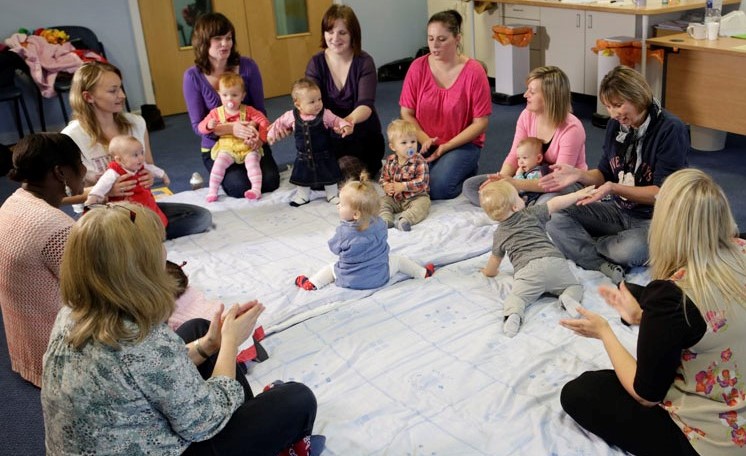
6. Children settling well into nursery or school, as they were confident and familiar with doing activities with groups of children and adults
She was quite quickly settled in to nursery because I think she’d already had the practice with Peep”
7. On-going confidence and involvement with both their own learning and their children’s – a couple of parents had gone on to do early years training and work, and all felt more confident
I think ‘cos you’ve… been able to take her to a Peep session and been able to talk to other mums and the people who are running it, it gives you more confidence when they go into school, … so you will go and ask a question… Whereas with the others I didn’t, so when you would go to like parents’ evening you’d just sit there and not say nothing but with her I always ask questions”
This study indicates that attending Peep sessions as a baby and toddler directly encourages and enables children’s early learning, facilitates their socialisation and develops parents’ active interest in their child’s development. Together these three elements help strengthen the home learning environment and contribute to ‘school readiness’.
Other comments made by the parents also suggest that:
- belonging to a Peep group, with a defined membership and programme, provided support and encouraged attendance
- a community intervention that employed the same people in the same area over several years was at an advantage in recruiting and engaging reluctant parents.