
supporting parents and
children to learn together


Blog: Peeple and Kenya… Connect
Nearly 30 years of delivering Peep has taught us that we have much to learn from families - so we approached our work with Kenyan communities with real excitement. Why did we - and our partners, the charity Kenya Connect - think that the Peep Learning Together and Antenatal programmes might be effectively used within these communities? Because the core, universal elements of Peep are those that shape every child: the very early relationships that underpin a child's ability to trust and understand, and the brain development that goes on during those first weeks, months and years, giving children the best start in life. Peep isn't about special equipment or special activities, it's about what families do in day-to-day life. If parents can really engage with everyday learning opportunities and understand what an impact that can have, their child is going to pick up on that. And during our time with the wonderful Kenya Connect charity and families that they work with, we found that there was a real interest in learning about what they can do to support and make a difference to the children in their lives.
To find out more, watch our Peeple and Kenya Connect video, and read the diary below from Liz, our National Training and Accreditation Manager at Peeple, from her visit to Kenya to collaborate with colleagues from Kenya Connect.
Family Engagement Session: Supporting young children’s early learning and play
 We were delighted that hundreds of families signed up in advance for our parent session at the Kenya Connect headquarters near Nairobi, giving us a small indication of the enthusiasm which we would be met with. Kenya Connect is a charity with a vision of empowering rural communities to harness the benefits of education to drive sustainable development. As well as being a staff base, the Kenya Connect building houses an incredible community library, home to thousands of books for all ages and interests, a Makers Space where groups are held and learning opportunities for adults and children are provided, including LitMoms, sewing group and Saturday Storytelling. A busy hub of opportunity and collaboration.
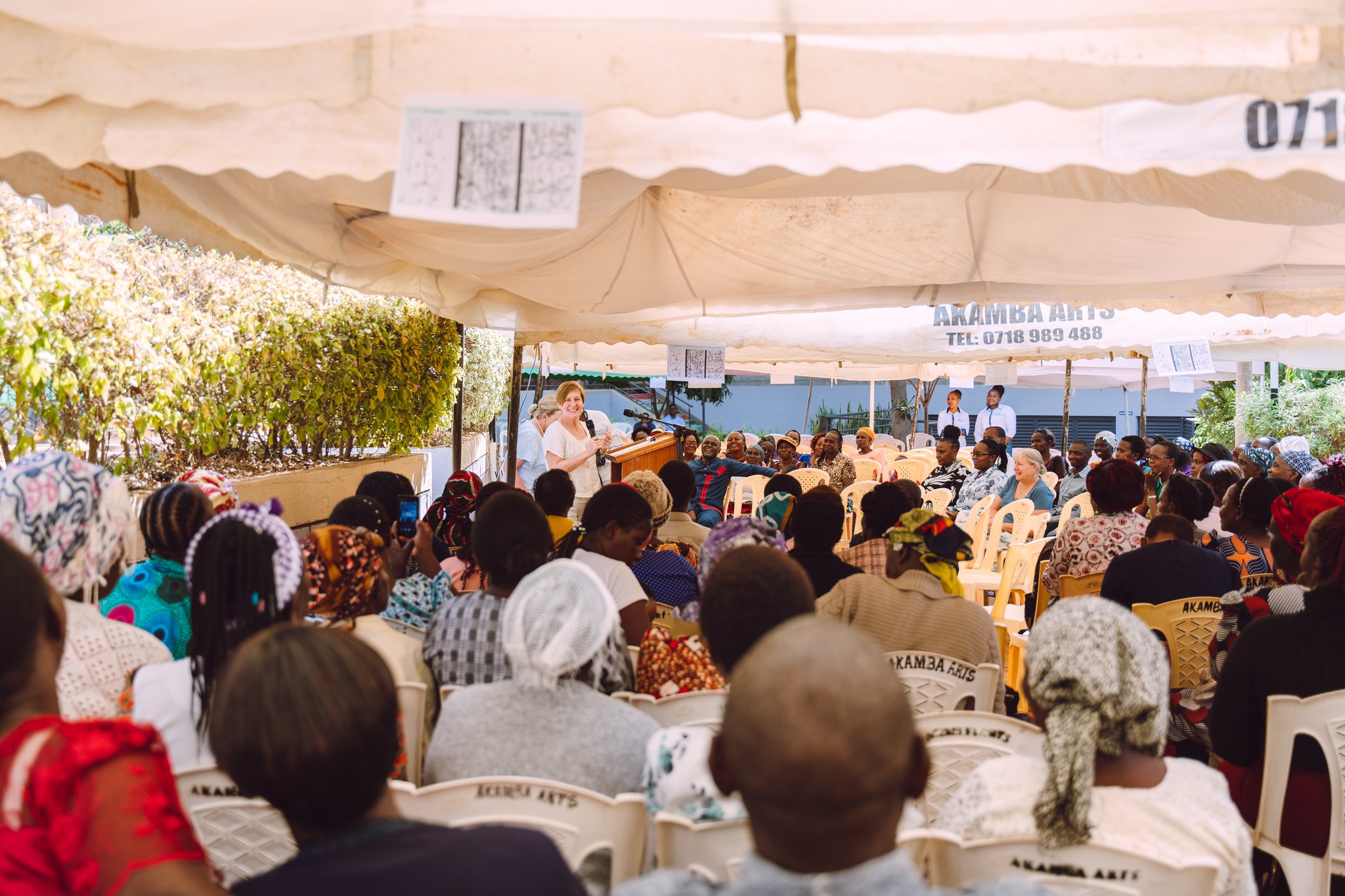
After early morning nerves that no-one might turn up, the families started to arrive, with babies swaddled close, often on the mother’s back, and toddlers walking alongside. By the time we started, around 300 adults had joined us. They were predominantly mothers, though we were so pleased to see many grandparents, extended family members and men, equally interested in finding out more about Peeple, our programmes and the importance of their role as parents and carers. Western culture has much to learn from this ‘village’ support system and mindset.
The audience were keen to engage, and we had many volunteers offering to come up to support us with activities and role play. Singing all together, and experiencing the warmth and eagerness of every participant, was a total joy!
 We began the session with information about brain development, sharing images of the amazing brain structure developments between birth and age 3. Using balls of wool (as in the Peep Antenatal Programme), participants helped demonstrate how interactions with those closest to them stimulate a baby’s senses, strengthening connections between the neurons in their rapidly developing brains.
One of the universal pressures felt by parents is the feeling that they should be buying expensive resources and toys to support their child’s development. It’s a myth we were keen to dispel. As the audience were seated, I saw a sea of vibrant pattern and colour – the women’s clothing was an early maths gift! Parents were thrilled to discover that their own outfits could support conversations around shape, size, colour, pattern, counting and more, with their babies and young children.
 Earlier that morning, my colleague Magdelize and I had gathered fallen leaves to act as a focus on early maths concepts. We put small stones, sand and shingle into empty water bottles to assist with a discussion about babies and young children learning to make sense of sounds, developing their listening skills. An empty cardboard box became a shape sorter and a magic sounds box (with local African animals inside of course), easily supporting both early maths and communication and language.
All the activities and examples underpinned our key message: the simple things that parents do in day-to-day life to support learning, with items readily available to them, make a big difference. Believing that our Antenatal and Learning Together Programmes could be used cross culturally is one thing - observing the impact directly was astounding. These parents were so eager to give their children the best start they possibly could in order to arrive at school aged 6 with home-learned skills and self-confidence. They were keen to learn more about child development - to listen and watch, and to view through an ORIM lens, thinking about the Opportunities, Recognition, Interactions and Modelling which they provided in everyday life. Every parent we asked was able to share something that they would do differently with their newfound understanding, and the very next day a parent approached me to share that she had read a story to her unborn baby.
Learning Together Programme (LTP) Training for practitioners
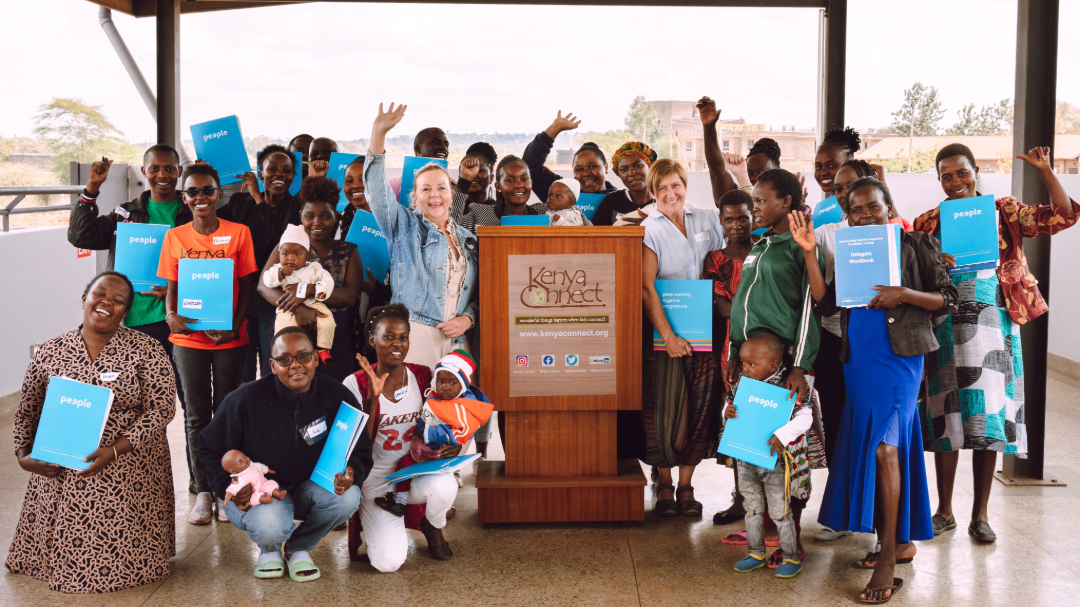
22 practitioners including Kenya Connect staff, Public Health practitioners (and a few parents!) joined the 2-day Learning Together Programme training on the rooftop of the Kenya Connect building. The space was wonderful (if a little windy for the paperwork at times!).

We delivered the usual components of our Learning Together training: the Programme’s evidence base, the five main elements to cover within Peep sessions, considering key strand and key topic points, thinking of songs and stories which connect to the topic. We again focussed on the natural resource around us (leaves, sticks, stones) with the addition of some books, boxes and simple playthings provided by the Library and Makers Space staff at Kenya Connect.
After a recap on the second morning, we placed the trainees into small groups and gave them some prep time for their mini Peep delivery. Unexpectedly we had five parents and babies arrive to participate on day 2 having heard something of what was happening from the community. So we abandoned the need for the use of dolls – and the teams delivered their mini Peep sessions to a ready-made Peep group! Parents and babies took everything in their stride, fully engaging with the practitioners. The standard of session delivery was fantastic – the delegates appeared relaxed, natural and very happy to throw themselves into the whole experience.
 During one of the demo sessions a child really enjoyed a water bottle ‘shaker’ with small stones inside (legumes/grains are a valuable food source and therefore would not be used to play with). A practitioner took the lid off a shaker bottle and blew across the top to demonstrate how sound could be made. Immediately the 10 month old took his own bottle shaker towards his mouth. Of course the lid was secure, but this beautiful example of providing rich learning through modelling behaviour was captured and the parents observing this were delighted.
Saturday Storytime
I had been invited to lead on the story, chosen by the children on library day last week. Seventy children aged between 4-12 years arrived, armed with their library cards and much enthusiasm to engage with the story, songs and themed activity. The book was ‘Kojo and his Father’, a story about how Kojo’s father introduces Kojo each day to a different aspect of STEM (science, technology, engineering and maths), and how they learn together about the weather and seasons, baking, coding, planting and growing, using a microscope and exploring maps.
The children’s ability to understand and speak English varied hugely but they sat patiently and seemed to absorb every word. Songs were then shared, questions asked and answered, and we helped one another with the prepared craft activity - each child was able to make a windsock from toilet roll insert and streamers (not an easy task with 70 children!).
Next steps
We left feeling positive and optimistic about our contribution to Kenya Connect and their partners and communities. There is much we can offer and there is much we have learned from the inspiring and hopeful communities we were so warmly welcomed into.
Our conversations with Kenya Connect have continued. We are thrilled to be working with them again in February this year to establish a Peeple/Kenya Connect Training and Support Agreement, and to train 12 practitioners in the Peep Antenatal Programme. I’m looking forward to what emerges from this exciting partnership… watch this space for more news soon.
Thanks to all the families, practitioners and video producer Reulo for helping us make such a wonderful film.
Liz Ersoy, National Training and Accreditation Manager, Peeple
Contact Liz to find out more about our work in Kenya: Email: [email protected] or LinkedIn