supporting parents and
children to learn together


Blue
inter-generation peep
Body:
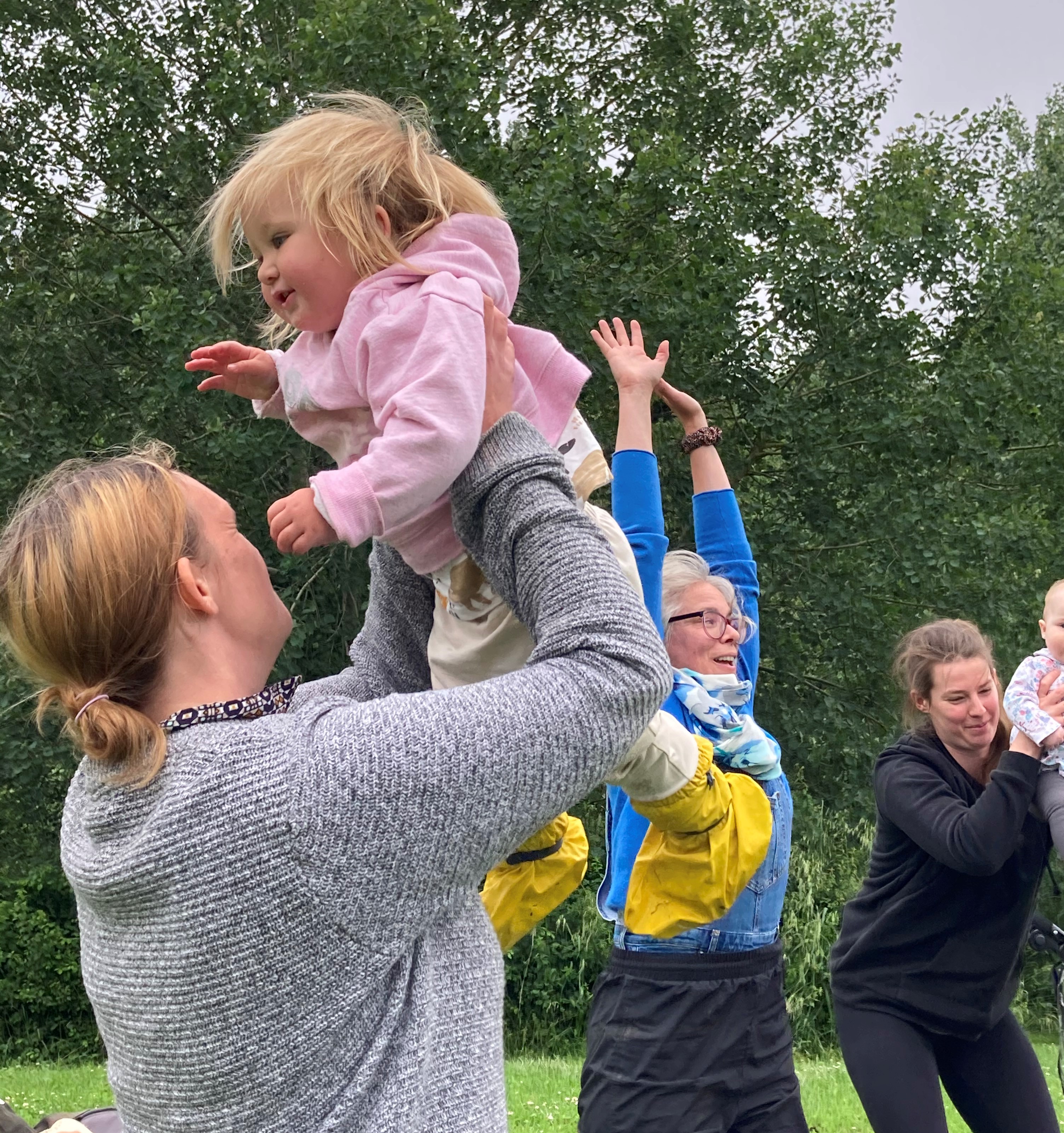
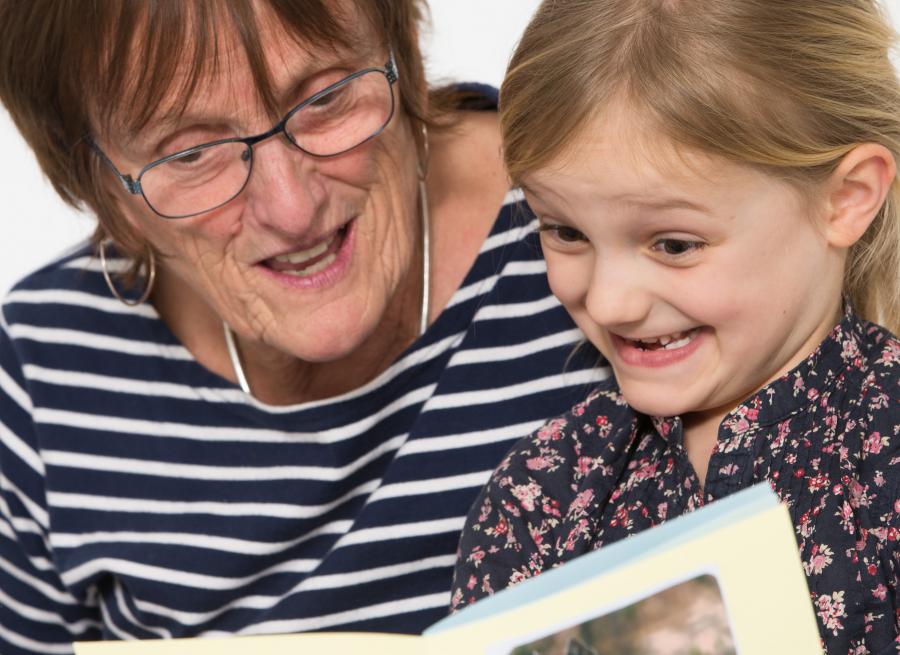 "Our Baby Peep group meets in our Edinburgh Community Centre at the same time as an Over 50s group meet in a different room. Recently, the over 50s asked if they could join a Peep session, especially for the singing. Our Baby group families agreed, and the following week they joined us at singing time.
We started our session with Peep songs, which led to some of the over 50s suggesting nursery rhymes that they knew. These were more traditional, and lots of parents remembered these from their childhood. One of the over 50s who has additional needs appeared to especially enjoy 'Twinkle twinkle little star', and she gave us a solo rendition. Everyone joined in with the actions to the songs. We asked our visitors if they would like to stay for our story as well, which they did.
As Peep practitioners, we felt quite emotional watching the interaction between the two groups, especially as our visitors were largely in their seventies and eighties. We feel that both groups got a lot from this session, and everyone said how much they’d enjoyed it. We are now planning to do this once a term, with refreshments in the café area afterwards to promote more social interaction."
Feedback from Linda and Eileen, Peep Practitioners in Gilmerton, Edinburgh
> read more about the benefits of singing across the generations.
Feature box colour:
Side Quote:
‘Peep has made me think about my Grandchildren’s play and given me lots of ideas, it has been brilliant.’
Side Quote Color:
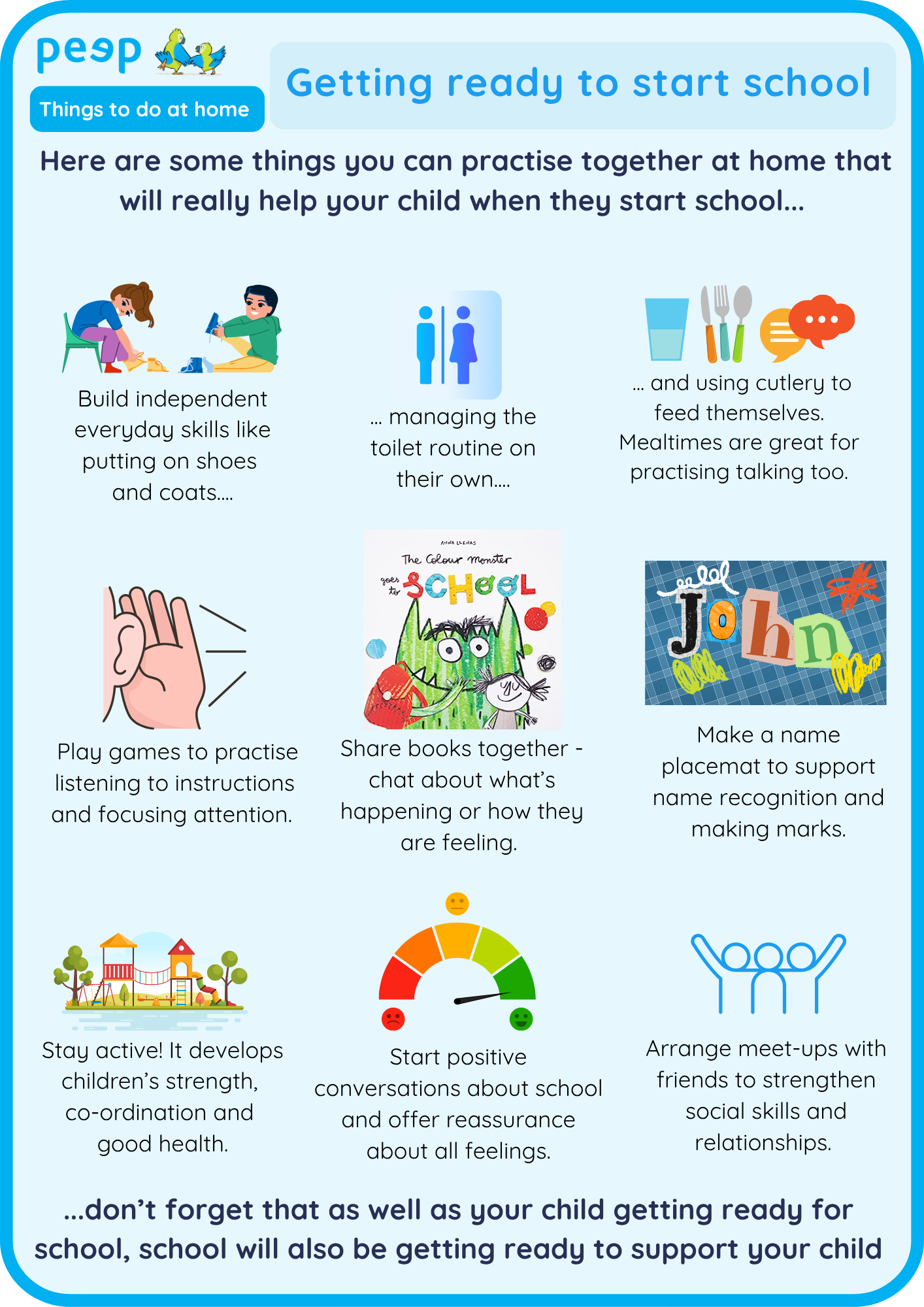
transition peep - into pre-school, nursery or school
Body:
Transition Peep is a great way for schools, nurseries and pre-schools to enhance school-readiness and engage parents, by:
- welcoming and preparing parents and children for the transition from home to the setting - introducing them to the activities and routines of your setting (linked to relevant early years frameworks, such as the EYFS - Early Years Foundation Stage)
- sharing ideas from the Peep Learning Together programme, about how parents can support their child's play and learning at home
- improving parents’ confidence and ability to support and value their child’s learning and development - valuing and building on what parents already do
- enabling parents, children and staff to get to know each other:
- helping children to settle in more quickly
- providing the opportunity for families to raise and discuss common concerns, reducing anxiety
- providing opportunities for staff to identify, and informally discuss with parents, any additional needs or potential referrals to other services
- improving two-way support between parents and staff
- helping families get to know each other, and develop local peer support networks.
- increasing staff skills and understanding of the value of parental involvement, contributing to statutory requirements
- helping parents identify their own learning and development needs and potential pathways (e.g. signposting to relevant courses or services).
related case studies:
> Transition into school reception class in Hampshire - case study
> Transition from nursery into school in Edinburgh - case study
> Preparing and sharing mealtimes in nursery and home in Highland
If you're a Peep-LTP-trained practitioner - in the log-in Members Area you can find session plans and resources for a Transition Peep course, which you're welcome to use or adapt.
> Early Years Pupil Premium funding can be used for Peep Training and/or delivery to help narrow the gap for 3-4 year olds - find out more
Feature box colour:
Side Quote:
find out more or book training
tel 01865 397 970
[email protected]
> dates & booking
> in-house training
> training courses
> sign up to our e-newsletter
Bottom Quote:
"I love doing Peep and so do the parents!! I work in a foundation stage setting in a primary school. I have linked up with the project worker at the local Children's Centre to do Peep. It has been a challenge finding time to facilitate Peep but myself and colleagues can see the amazing benefits it has to families and their children. All the children's communication and language development has progressed, and parents have been signposted on to other courses. To finish off we all went on a beach trip together with the local Children's Centre."
Feedback from Rachel, a nursery nurse at a primary school in Bracknell
Side Image:
Side Quote Color:
Image 2:
peep groups: overview
Body:
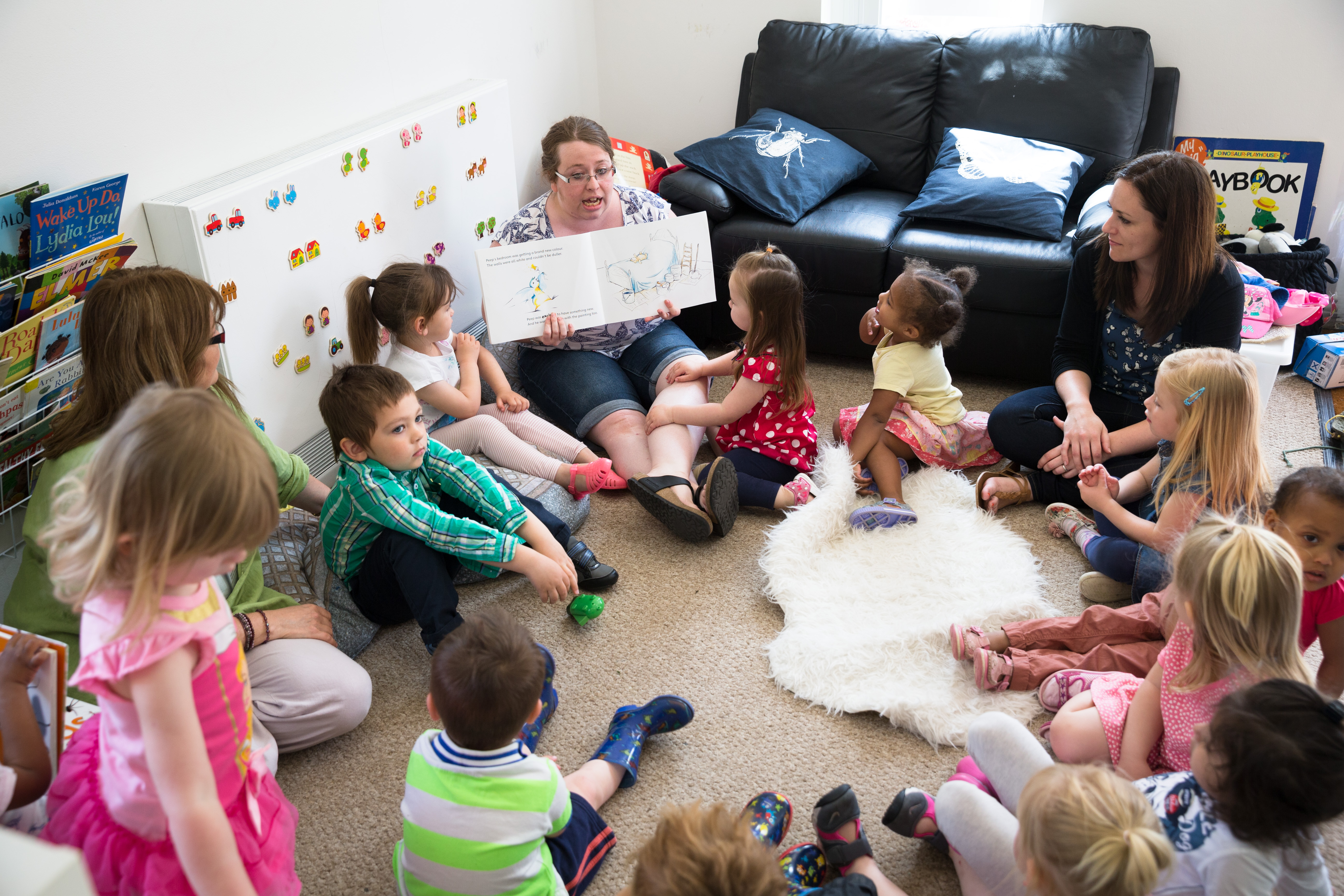
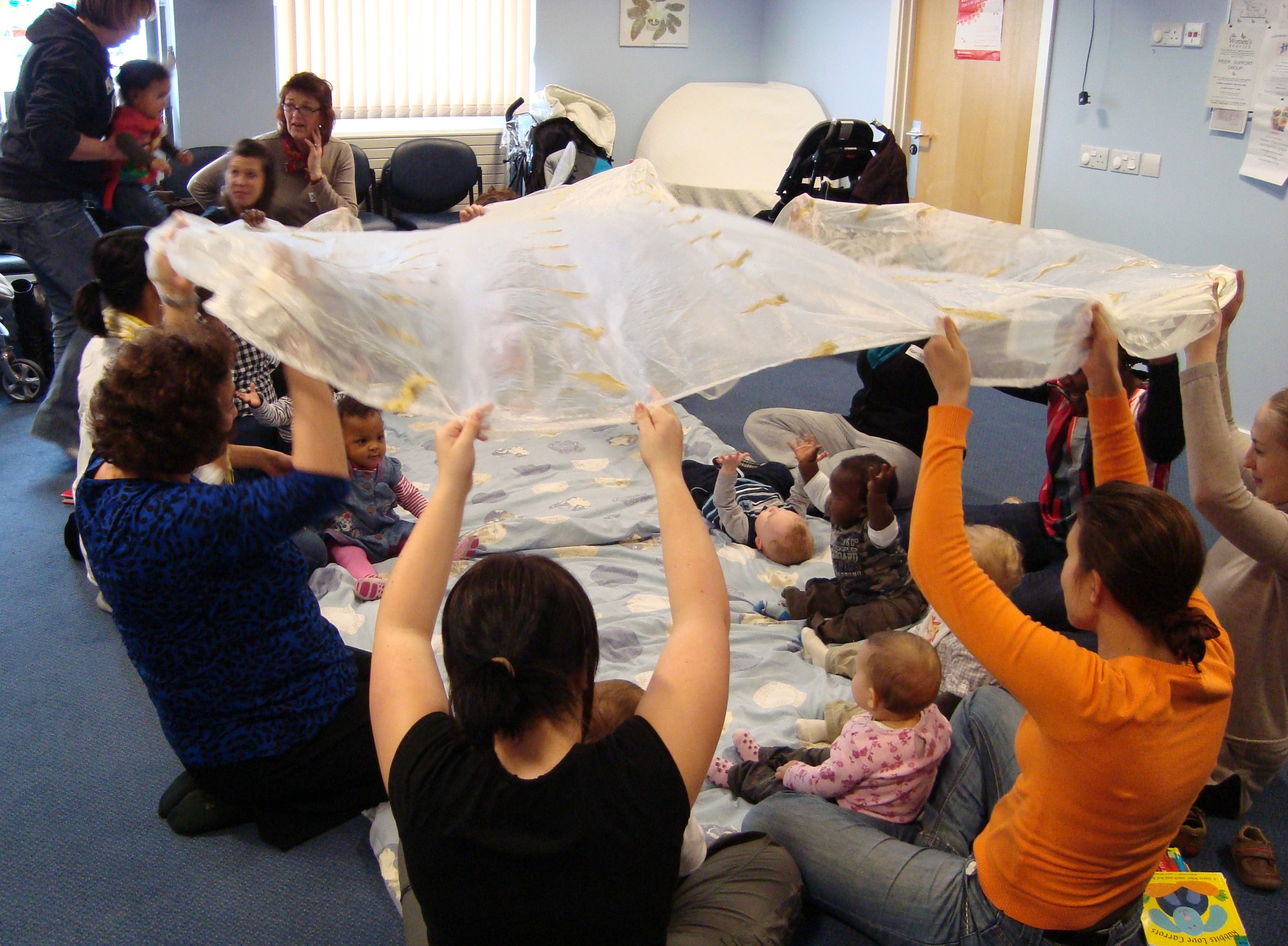 Peep groups are for mums, dads, carers and their children together, and aim to support families with their children's early learning in a simple and enjoyable way. The Learning Together Programme is intentionally flexible, enabling Peep-trained practitioners and/or families to choose the range of child development topics, and the number of sessions, that they want. Groups can be for babies, toddlers, pre-schoolers or mixed age. They can be hold indoors, outside or virtually online.
An important part of Peep groups are the relationships that develop. There are usually up to a dozen families in a group. The welcoming approach and group agreement developed by all the families creates a safe space, where a sense of trust and security can develop. Parents and carers become confident in sharing their own experiences, challenges and ideas that they have tried at home. Groups can be open to all families in an area, or targeted to meet particular needs or interests - see examples below.
Peep practitioners (if appropriately qualified) can offer parents and carers the opportunity to complete a QS credit-rated unit as part of the Peep Progression Pathway, over at least a dozen sessions. This can contribute to parents' confidence as a learner, and to their employability.
what happens in a peep group?
The different elements of a Peep group provide opportunities to have fun together and to share the key ideas that support children's development. Peep sessions include:
 songs and rhymes
- joint play activities
- a talking time for adults (chatting about an aspect of children's development)
- story and book-sharing time
- ideas for families to try at home.
Adults do not need to read or write during a Peep group. Everyone is invited (but not pressured!) to join in during singing and talk time.
targeted peep groups
Peep groups may be targeted to meet the needs or interests of families. Parents/ carers and their children can attend universal Peep groups (open to everyone), but sometimes prefer, initially at least, to attend a group with people that they have more in common with.
These have included groups for young parents, dads, foster carers or kinship carers, parents with post-natal depression or low mood, families whose children have additional needs or disabilities, children with speech and language delay, expectant parents with substance dependency issues, traveller families, families with English as an additional language, child-minders, parents/carers with low literacy levels, etc.
The menu on the left includes a few examples of how Peep programmes have been used around the UK and beyond.
Feature box colour:
Side Quote:
find out more or book training
tel 01865 397 970
[email protected]
> dates & booking
> in-house training
> training courses
> sign up to our e-newsletter
Parent feedback from online Peep sessions:
'T has loved the Zooms as he has the freedom to play with his toys and join in with the group, which has helped to keep him more interested as he involves his small toys in the story and uses them to act out what’s happening. Normally he doesn’t have a long enough attention span to last a whole story. He has also really enjoyed the singing and can remember lots of songs and actions that he will sing to himself through the day.'
Bottom Quote:
Comments from Peep parents when asked: 'If you have any older children who came to Peep, do you think it has helped their learning and development?’
-
‘Peep helped him lots as he didn't enjoy doing stuff like singing in front of people. He went into nursery confident.’
-
‘Both my children have been very good with their speech. I believe bringing them to Peep from such a young age and singing with them has supported this. Thank you so much for Peep. It really has made a difference.’
-
‘Yes, Peep helped them socially, and it helped me to make long-lasting friendships.’
-
‘Yes, Peep built their confidence, they can sit, listen and learn to wait, share and take turns.’
-
‘They have picked up counting quickly, loved books and still remembers the songs. They have confidence being around other children.’
Side Quote Color:
peep in child health clinics in oxfordshire
Body:
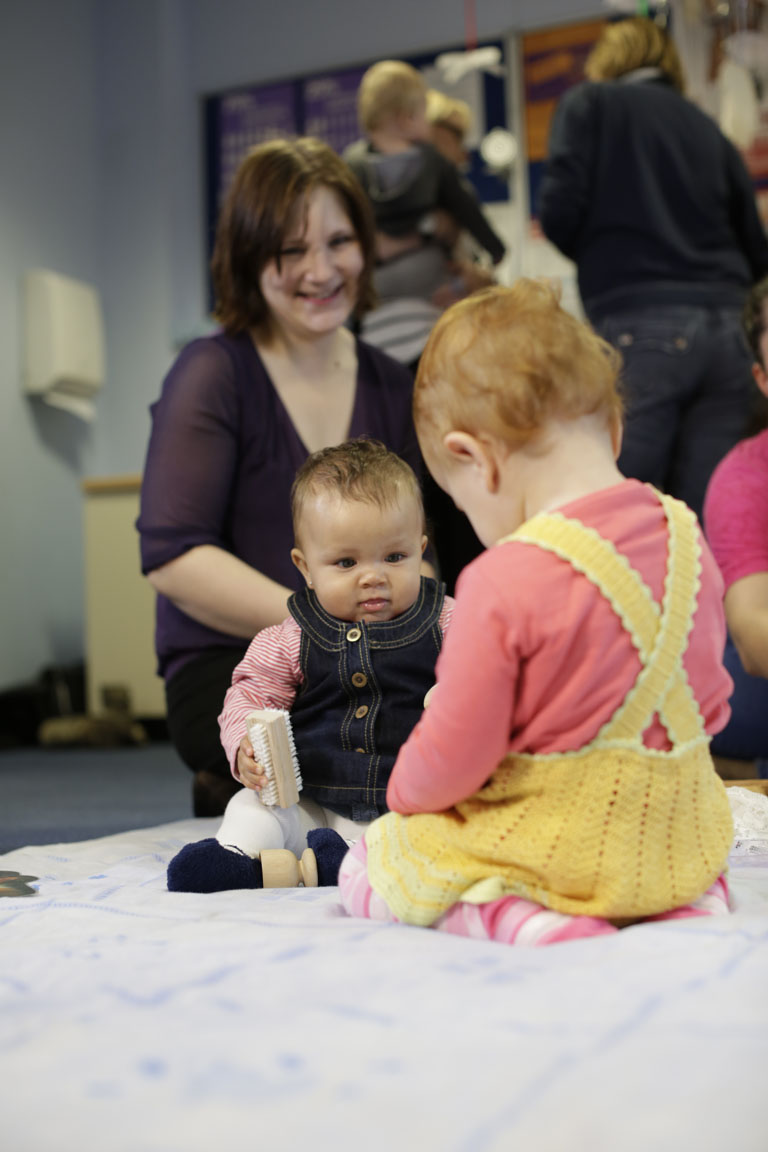
Peep practitioners, working alongside health staff, began to provide an informal Peep session in two child health clinics in Oxford in 2009. These Peep drop-in sessions are known as Early Explorers. The Peep-trained practitioner spends time with families while they are attending the child health clinic or waiting to see a health visitor. They set up a play space on a quilt on the waiting area floor, with treasure baskets and picture books. The practitioner greets all families as they come in, and engages with as many as possible. This includes talking with families about parent-child interaction, child development and ideas to try at home, inviting and encouraging parents/carers to play with their baby or child, and sign-posting families to other local provision.
The Peep-trained practitioner could be someone who already works in the child health clinic such as a nursery nurse, or from elsewhere in the community, such as a children’s centre worker. A follow-on Early Explorers group can also be useful, inviting families who are hesitant or reluctant to access other services.
benefits of partnership work
A two-year research project on Early Explorers, led by Professor Jane Barlow and Chris Coe at the University of Warwick (2009-2011), identified various benefits from this joint working approach. The health and early education/family support elements complement each other. The joint working offers opportunities to get to know families who have not accessed other services. Families can be offered 1:1 support or a place at an Early Explorers group, or be signposted on to other services, as appropriate.
The development of such partnership working between health and the voluntary sector can contribute effectively to delivery of the Healthy Child Programme and similar programmes. It may also help to change public perspectives about the role of child health clinics, from an emphasis on physical well-being to a focus on the development of the ‘social baby’. It enhances the opportunity for early intervention, during the crucial first months of life, to foster parent-baby responsiveness and interaction, leading to positive attachment. For many families these clinics represent a real opportunity to get to know others in a similar situation in their own locality, to develop friendship and support, and thereby to increase social capital, factors that are not only important for healthy families but also for healthy communities.
feedback from parents
Parent attending the clinic drop-in session:
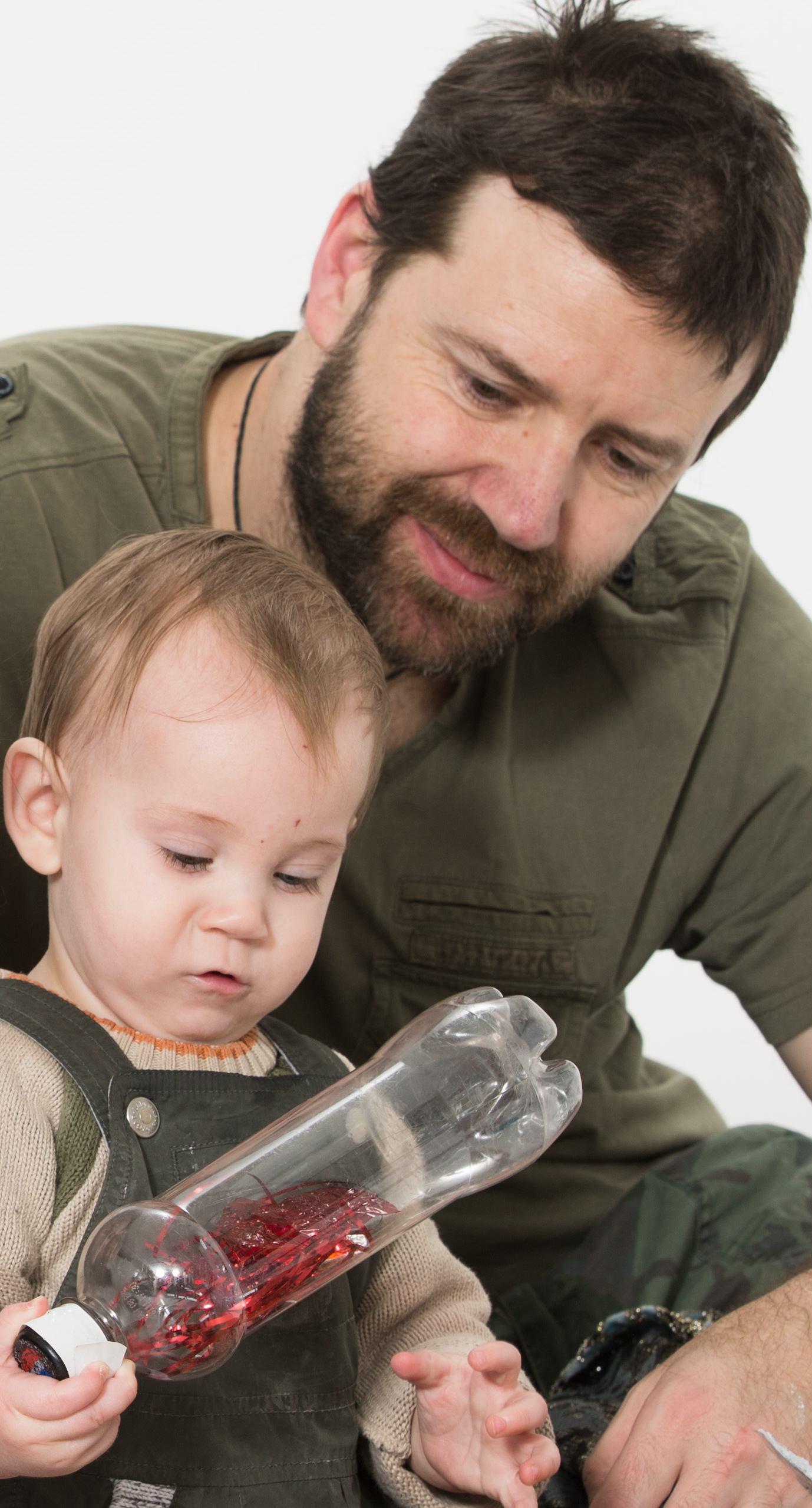
- ‘The first time when I walked in there, there were two other babies and [the Peep Practitioner] was showing them books, baby books and those bottles with shiny stuff in it with glitter and so on. And they were so like very… curious what’s there and so on. So I just went wow that’s really good. I wouldn’t think about that. Because she’s my first child and to be honest with you I didn’t know what to do with her. Like how to play with her and what to show her, how to develop her thinking.. you know...stimulate her brain. I do remember she was quite...crying... and [the Peep Practitioner] showed me the movement, how to calm her down, it was really good, I took a lot from the group and the approach of the staff.’
Parents attending the Early Explorers group:
- During interviews with parents attending an Early Explorers group, nine of the ten said they would not previously have accessed any other group provision. They found the sessions supportive, confidence-building and enabling.
feedback from health visitors
The child health clinic offers a unique opportunity to meet and forge relationships with parents in a non-stigmatising, non-threatening environment, where families already choose to go. Using a universal approach where all families are welcome, vulnerable and unsupported parents can be identified and offered more targeted services.
- ‘More vulnerable families do come to clinic, they are not regular attenders to clinic but they do come, say for a vaccination and that’s when we can direct them to Peep ....and Peep is so approachable and non-threatening that we have actually engaged some of our more difficult and harder to reach families with Peep. So I really think that it’s a harmonious relationship that benefits the mother and child.’ (Health visitor)
- ‘Peep complement our service and I feel we complement Peep’s service. I find when I do clinic that some Mums come just to come to Peep which I think is wonderful and we have been able to introduce parents to the concept of Peep, something that they didn’t know about. Some Mums were unaware of the need to communicate with their baby, even thought they were not verbally communicating back so you know, it’s been a revelation to some Mums, just how important it is to stimulate your baby.’ (Health visitor)
Feature box colour:
Side Quote:
Parent comment on Peep practitioner presence at child health clinic: "Normally it’s just you go and don’t really talk to each other unless you know them anyway. But with Peep there everyone seems to talk to each other. It's more relaxed."
> Read more about the Early Explorers child health clinic study carried out by Professor Jane Barlow and colleagues at the University of Warwick
Side Image:
Side Quote Color:
Image 2:
drop-ins or stay and plays
Body:
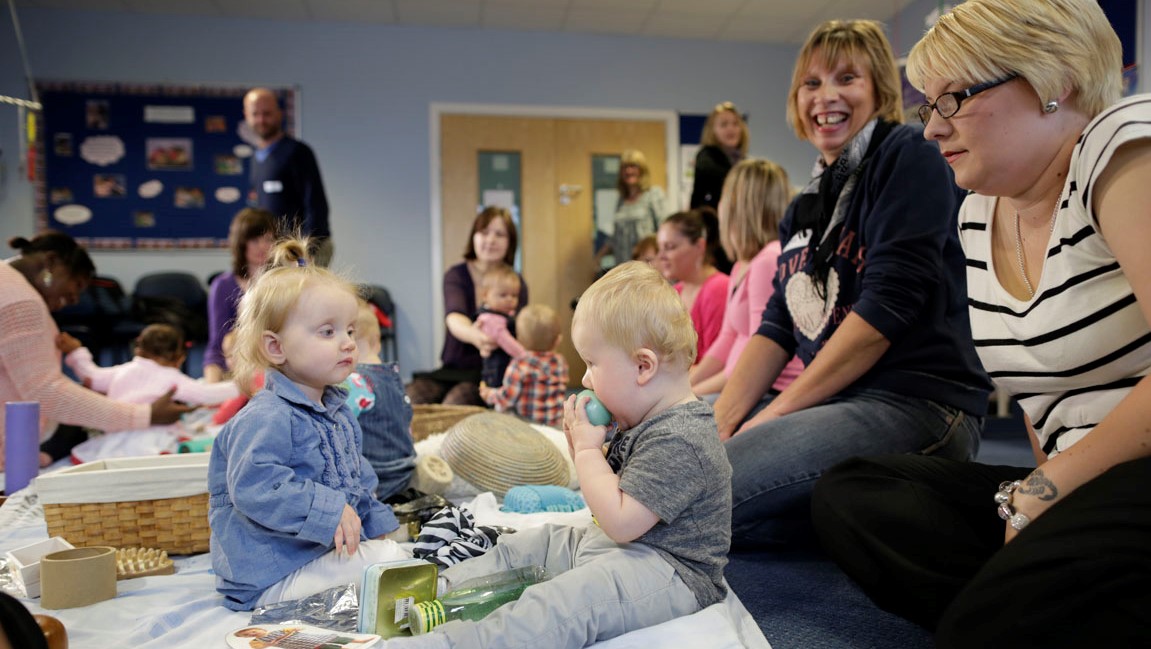
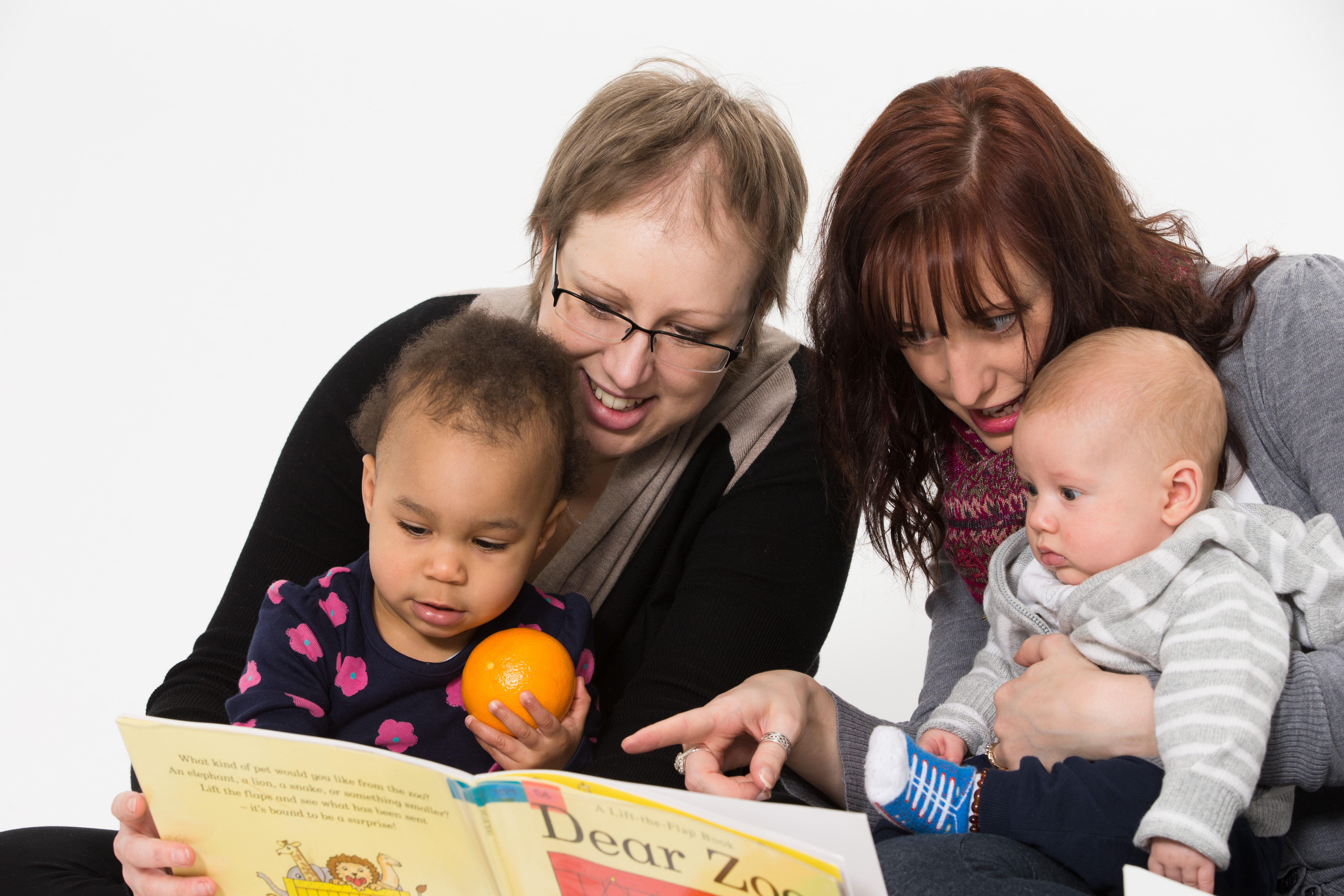 Drop-in sessions, such as 'Stay and Play' or 'Parents and Toddlers', are a great way for families to meet each other and have a change of scene and activities. They are more flexible than a group - there is no expectation that parents/carers attend every week or get there for the start time. They can provide a relaxing way for mums, dads and carers to chat together, while their children play with other children and toys, as well as joining in some of the activities with their child, with practitioners and parents sharing information about how it helps children's development.
Drop-in sessions also offer a great opportunity to share ideas with parents and carers in bite-size chunks, about how they can support their children’s learning through everyday activities, singing, stories and play. Peep can be used in new or existing drop-ins, or run in places where families already go, such as a local shopping centre, library or child health clinic, as well as in Family Centres or Hubs, Children’s Centres or early years settings. They can also act as a stepping stone for families to go on to attend a Peep group.
Through attending Peep drop-in sessions, dads, mums and carers are supported to enhance their understanding about:
- how adults can use the ORIM framework (Opportunities, Recognition, Interaction, Modelling) to support babies’ and young children’s learning
- the importance of developing conversation, of talking and listening to babies and young children, and how adults can help
- how to provide play opportunities which help babies’ and young children’s learning
- how positive relationships help babies and young children feel good about themselves and want to learn
- using numbers in everyday situations with babies and young children
- how babies and young children make sense of their world through exploring and making choices
- how the whole family can help babies’ and young children’s developing reading and writing skills through play and everyday activity together
- how to share books, stories, rhymes and songs with babies and young children.
Stay and Play session example - early maths
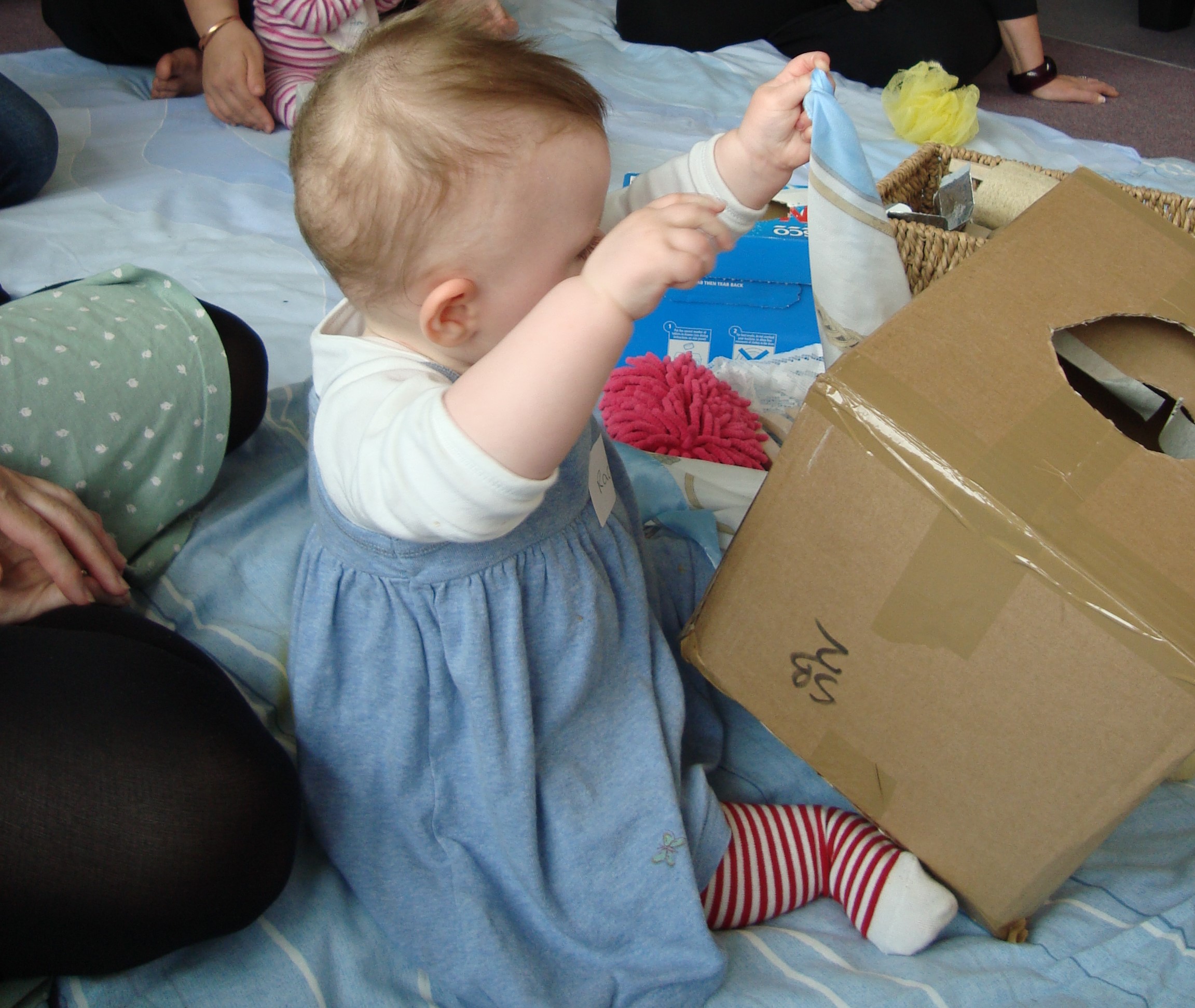 activity on the floor: posting things into a box
Families are encouraged to post items (e.g. socks, toy cars, pegs) into a posting box (a cardboard box with holes cut in the top and sides) and find them again when the lid is lifted.
Sharing a key idea: The practitioner talks with the parents/carers about matching things into pairs and counting 1, 2, as they are posted in the box. Counting an object in each hand is helpful for very young children.
activity at the table: feeding porridge to the three bears
Families are encouraged to feed the small, medium and large sized bears (made from shoe boxes), thinking about which size bowl and spoon (small, medium or large) each bear should have.
Sharing a key idea: Chat about how adults can help their children’s understanding of size, by talking about different sizes and pointing them out in everyday life.
sharing messages
As well as conversations, Peep practitioners also share these messages with parents through the use of short signs next to each activity, handouts, and cued modelling (explaining why and how they are doing something, as they are doing it). Peep Stay and Play sessions also have a singing and story time, so a relevant story (e.g. Goldilocks and the three bears) and songs (e.g. 5 little ducks went swimming one day) can link to the activities.
Feature box colour:
Side Quote Color:
outreach or home visits
Body:
A Peep session with an individual family can happen anywhere and at any time, either virtually /online or face-to-face.
Home visits
Peep home visits tend to happen when a family has a new baby or moves into the area, or when their child is due to start attending an early years setting or school. Some Peep-trained practitioners focus their visit on introducing the family to the Peep programme, while others incorporate Peep into their usual health, nursery or family support visit.
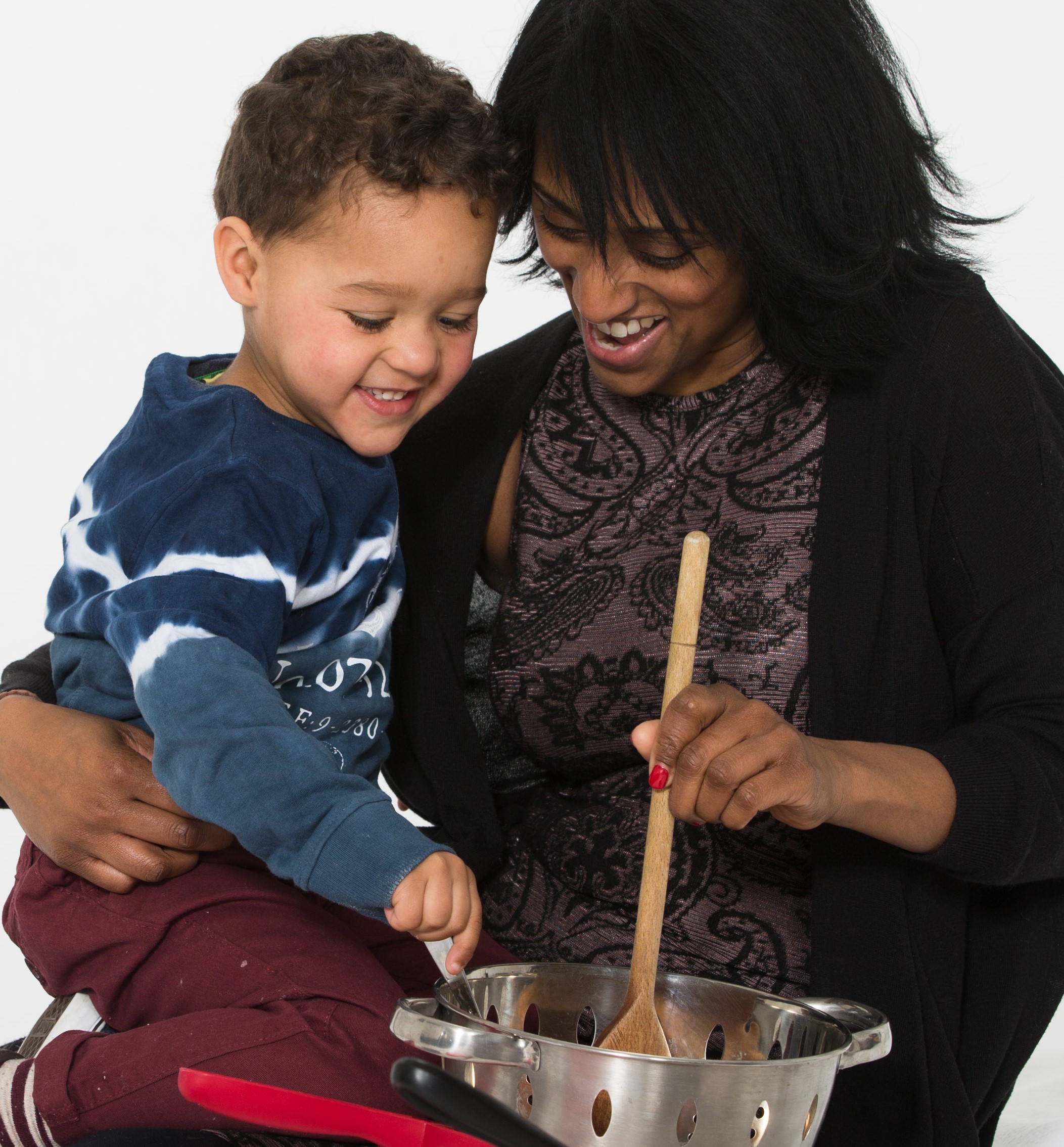 Visits aim to:
- start getting to know the family
- provide information about Peep and other local groups or services
- discuss and model a simple activity and book-share, involving everyone
- offer follow-up contact, or put the family in touch with other relevant services.
A few resources might be offered to the family, such as:
- leaflets about local services - including times, locations and contact details for Peep and other local groups
- Learning Together leaflets with information and ideas about aspects of child development that were discussed (e.g. 'Sharing books with babies', or 'Mark making' for toddlers)
- a picture book or a homemade book (made during the visit)
On-going outreach
Sometimes a practitioner and parent agree that the family would benefit from a few 1:1 Peep sessions, around parent-child interaction and supporting the child's learning and development. The practitioner and parent/carer agree on the focus of the sessions, based on the family’s needs and interests. The practitioner can use relevant Learning Together topics to plan future visits. Families often go on to attend Peep and/or other local groups or stay and plays, as well as gaining confidence and ideas for supporting their children’s learning in day-to-day life.
Feature box colour:
Side Quote:
‘Having a visit at home helped me come along to a group, made it personal’
Bottom Quote:
Feedback from a mother with two children aged 4 and 1 years old, whose husband (their father) was in jail. The mother cannot speak English well, she was isolated and depressed, and mostly, she said, she spent time with her children without interaction and play. She had four 1:1 Peep sessions at home.
‘This Peep home programme changed my life. I felt I was somewhere lost and this gave me support to trust myself and each week I learnt new games and ideas and slowly I started learning to believe I and my situation could change. Now I am beginning to understand my children. I did not know how language develops, reading stories, singing poems and just talking could make a big difference in our lives. Dual language books like ‘Little Beaver and the Echo' made a huge impact in my isolated life. Peep songbook and CD also reduced my loneliness. I did not know that music and play could play such a positive role in your soul. Making playdough, playing with treasure basket objects and drawing on paper, going out with my children gave lots of happiness to my children and learning to me. I listen to my children’s voices now, and my own too. I would like to learn the English language as well as driving, for me and for my children's mobilisation.’
Side Image 2:

Side Quote Color:
Peep Progression Pathway - qualification units for parents and carers
Body:
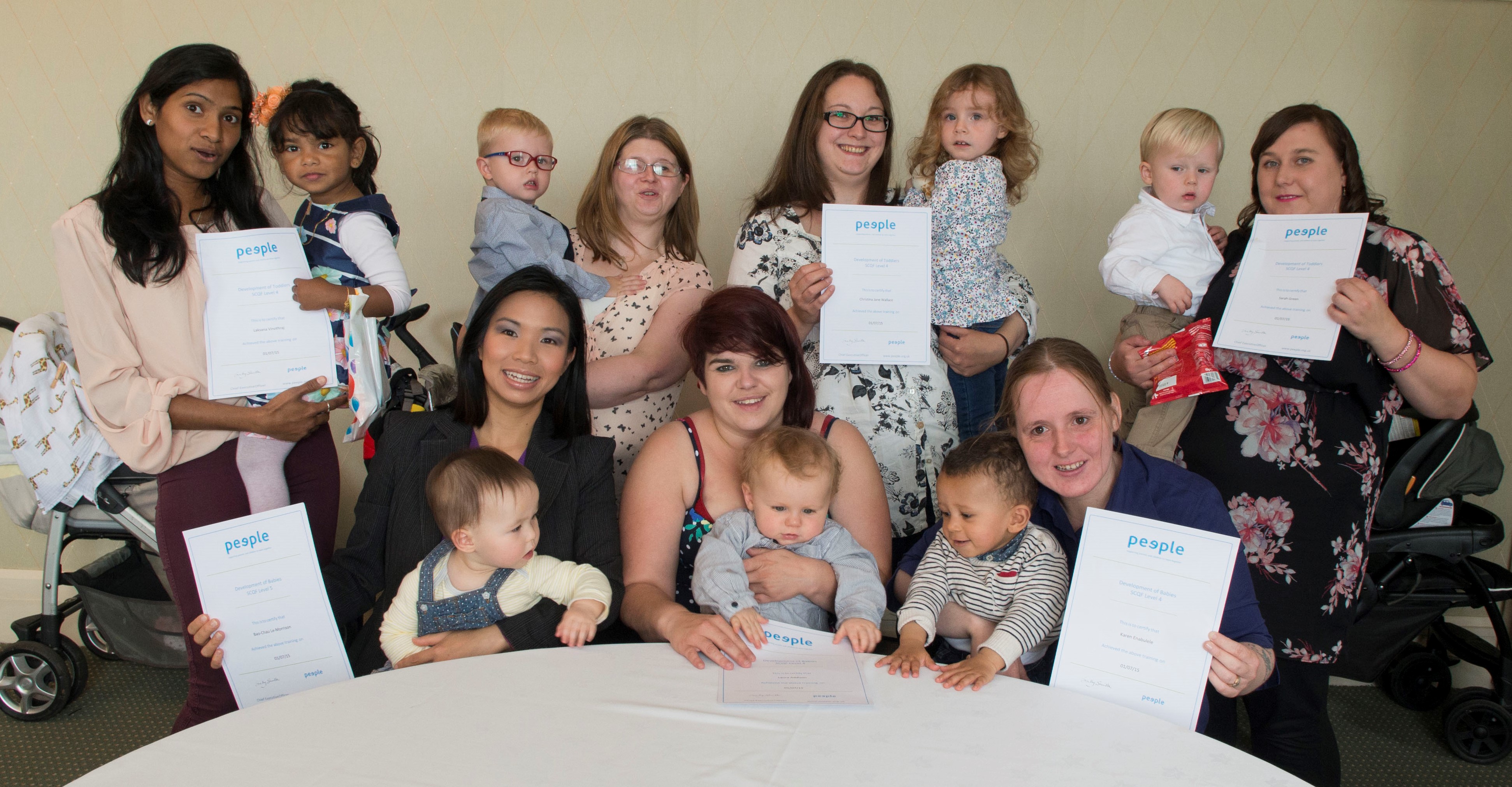
The Peep Progression Pathway offers nationally recognised units to cover three qualification levels for parents and carers as learners. At each of these levels, learners can follow a unit covering:
- any of the five Peep learning strands - Personal, social and emotional development, Communication and language, Early literacy, Early maths, and Health and physical development, and/or
- any of the four developmental stages - Babies, Toddlers, Pre-schoolers or Early Childhood - of the Learning Together Programme.
> Read more about Peep Progression Pathway delivery for organisations - including training, how to become a Delivery Centre, free information session and free Pathway Getting Started session.
Benefits of the Pathway for parents and carers
The Peep Progression Pathway units formally recognise the learning which is already occurring within a Peep session. This includes playing, talking, sharing books and stories, and singing with young children, and using ORIM.
The credit-rated units are assessed entirely by portfolio. Through this portfolio learners recognise and build on everyday learning. They reflect on their child’s development and on their own role as their child's first educator. Parents/carers have treasured them, both as a reflection of their own learning and as a keepsake about their child.
Learners who participated in the Peep Progression Pathway found it useful in a range of ways:
Furthering their understanding of child development:
‘It’s good to really consider why you do things and how it benefits your child’ (Parent)
Enhancing parent confidence and relationship with their baby or child:
'The course allowed me to grow in confidence in being able to understand babies' needs and wants. The talk time and listening to others helps put your own experiences into perspective. I'm able to listen to my baby more now and decipher cries and wants - tired, bored, hungry, etc.’ (Parent)
'I gained useful skills through the Peep programme and pathway that will help me day-to-day when I’ve been released from prison. It gave me a better understanding of parenting and what can help my child.' (Parent in Inverness Prison)
As a stepping stone into formal learning and employability
‘We are finding that parents who don't feel confident to register as a learner recognise that their portfolio work is just as good as their peers and often have a change of heart and submit their portfolios for assessment. It’s increasing access to parents who would never consider participating in accredited learning’ (practitioner)
'At the end of our Peep group I had the opportunity to complete the Peep Progression Pathway course and to support the running of a Peep group. I then attended the Peep Learning Together Programme Training and this led to me applying for a post with Midlothian Council as a Peep Leader – I was successful! To have the confidence to make a complete change in career is a real achievement for me. The Peep Progression Pathway course and the Learning Together Programme helped me become a better parent by supporting my learning and understanding of what a child needs. I realised that I loved the learning and wanted to do more.'
For personal development...
‘I haven’t had to think critically for a while, so it’s been good to get back into it’ (Parent)
... and enjoyment
‘I've recommended it to all my friends. A very worthwhile and valuable experience’ (Parent)
‘Practitioners love that the Progression Pathway is sown throughout our existing Peep Learning Together Programme’ (Practitioner)
Parents and carers involved in an evaluation of the Peep Progression Pathway reported that they have:
- a greater understanding of their role in promoting their child’s development
- an increased confidence in supporting their child’s learning and development
- more knowledge and ideas for improving the home learning environment
- recognised improvements in their own personal learning and literacy skills
- enhanced aspirations – with many going on to further their own early years and child development study and work opportunities
The units have been credit-rated by Qualifications Scotland (QS) at SCQF levels 3, 4 and 5 - equivalent to entry level 3, level 1 and 2 equivalent in the rest of the UK.
The Peep Progression Pathway - as its name suggests - often leads on to parents and carers taking further training or qualifications, or new career opportunities. You can read some of our case studies here:
- from Peep parents to Peep group leaders in Midlothian
- family learning and employability in Derby
- with Home-Start in Edinburgh
- with foster carers in Oxfordshire
- with inmates (and their partners) in HM Prison Inverness
- parent to classroom assistant in Dumfries & Galloway
Read more about:
> Peep Progression Pathway delivery for organisations - including how to become a Delivery Centre
Feature box body:
Peep Progression Pathway
offer parent qualification units in your Peep groups
Feature box colour:
Bottom Quote:
Feedback from a young mum: ‘I was very shy and didn’t want to come out. I had to get two buses to come to Peep. The qualification was a pull. It’s made me more confident, knowing what I am doing with my child’s development. I was nervous at first but really liked the two group leaders. It was not as hard as I had thought. I want to go back to college. I had a big gap in my CV so it enabled me to fill that and have something to speak about.’
Side Image:
Side Image 2:
Side Quote Color:
peeple principles
Body:
All Peep Programme delivery is underpinned by our principles:
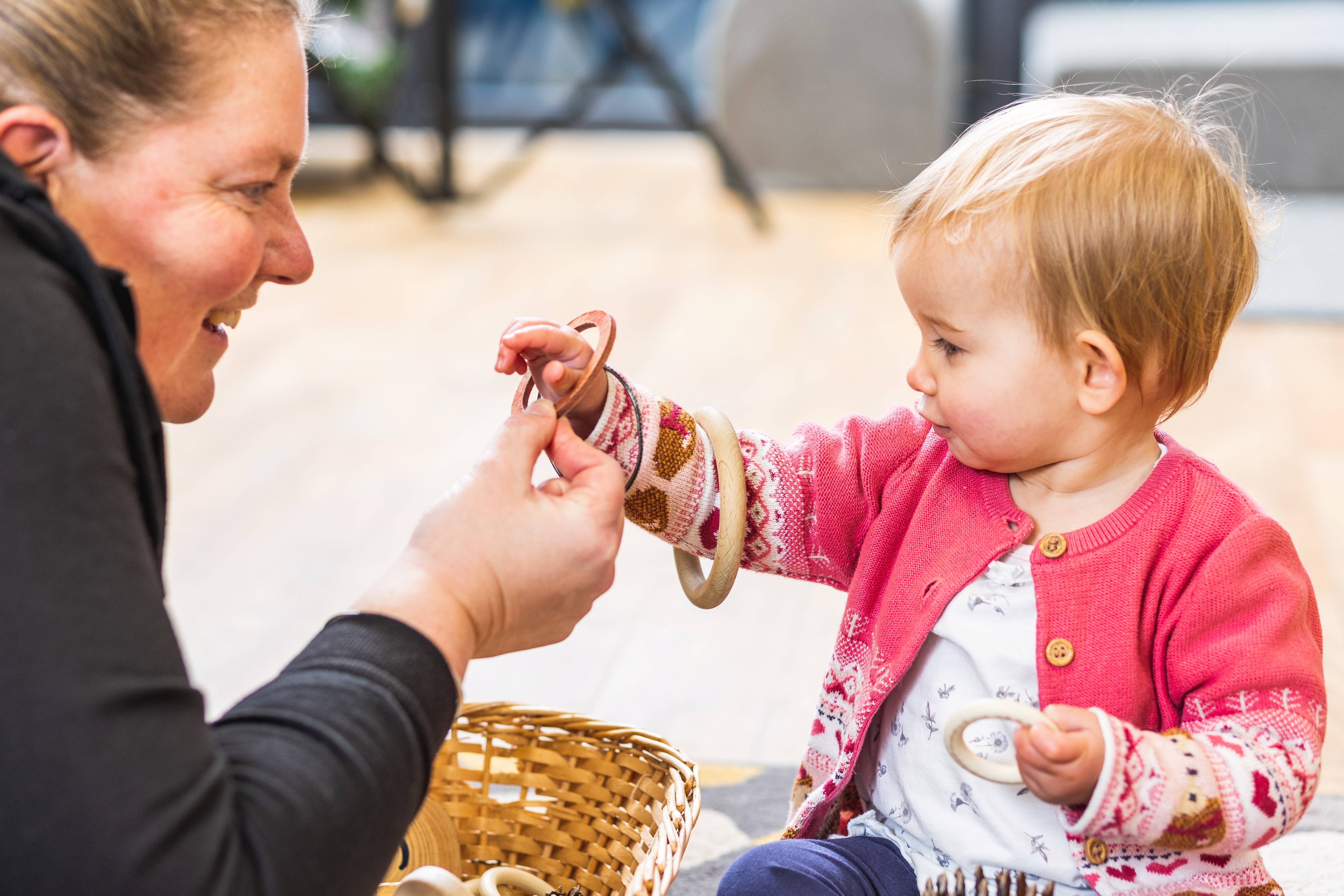 We believe that relationships are at the heart of learning
We believe in the potential of every parent, every carer and every child
We recognise parents and carers for what they already do, and help them to do more
We believe that lives can be transformed by building on everyday learning experiences
We recognise the importance of reflecting on the world through the eyes of others

The Peeple principles complement the United Nations Convention on the Rights of the Child (UNCRC). This covers all aspects of a child’s life and sets out the civil, political, economic, social and cultural rights that all children everywhere are entitled to. It explains how adults and governments must work together to make sure all children can enjoy all their rights, whatever their ethnicity, gender, religion, language, abilities or any other status. There are four general principles covering non-discrimination, the best interests of the child, the right to life survival and development, and the right to be heard. The Convention has been signed by all United Nations member states (other than the USA). Respecting and teaching children about their rights ties in with the broader support provided by parents and carers every day: listening, talking, playing, reading and spending time with children, helping them to develop empathy, understanding and interest in the people and the world around them.
Feature box body:
our principles
Feature box colour:
Featured box image:
Side Quote:
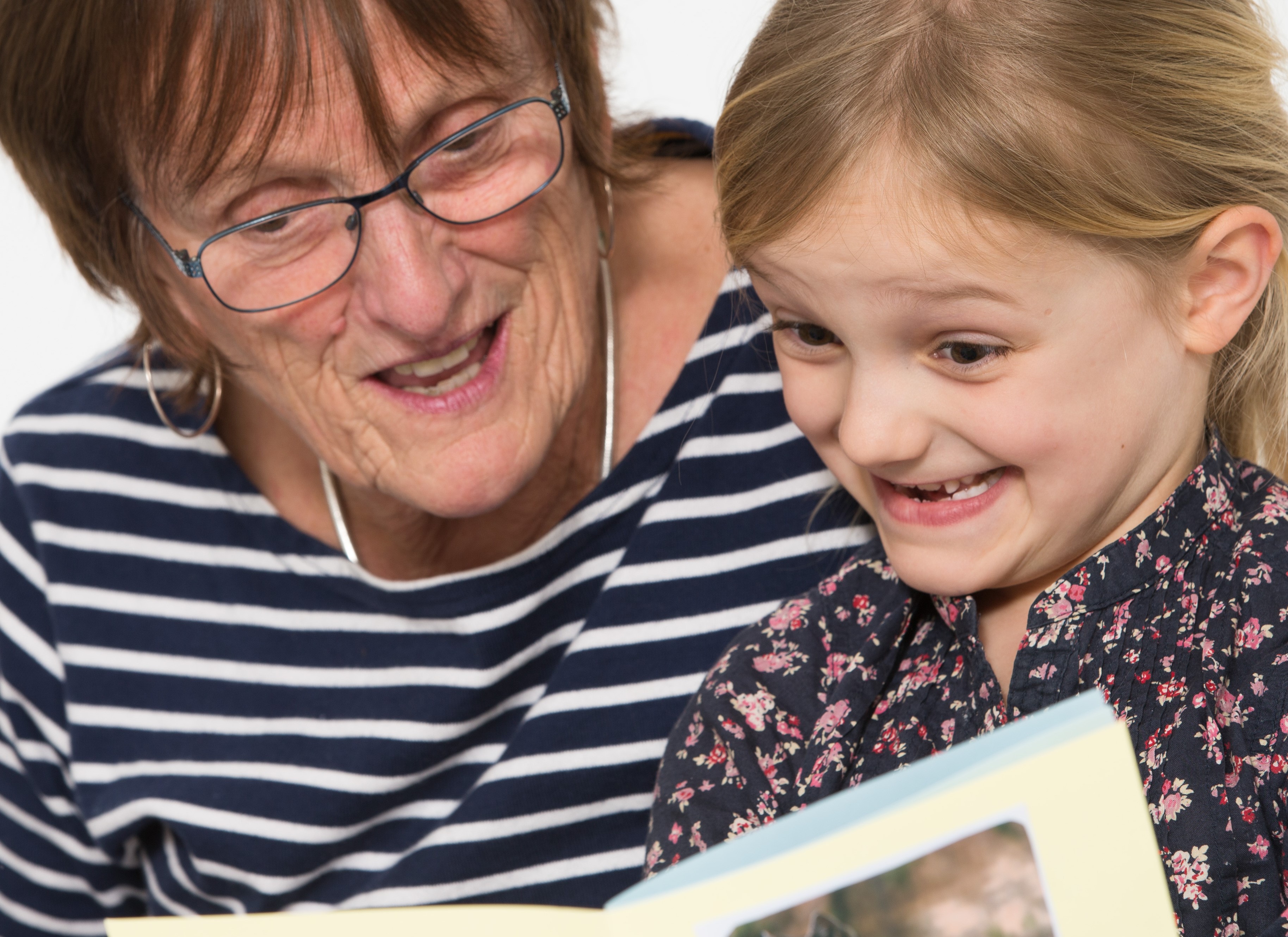
Has Peep made a difference to you or your baby?
‘Ooooh yes!!! He turns his own books and points at pictures and words.’
‘I’m doing more things with my child.’
'It’s helped my confidence and helped my baby’s confidence with other babies and people. He’s enjoying the company and the chance to copy and be encouraged by the other babies.’
Side Quote Color:
Peep Learning Together Programme
Body:
Peep Learning Together is an evidence-based programme that supports the home learning environment. It helps parents and carers make the most of the learning and play opportunities in everyday life, so that children become confident communicators and learners, and are ready for school when the time comes.
The programme is designed to be used flexibly by trained practitioners with families in any early years or family support setting. It is included on the DfE menu of Home Learning Environment evidence-based interventions for Best Start Family Hubs.
> Join one of our free Information sessions to discover how our evidence-based Learning Together Programme and training for practitioners can help to strengthen your work with families
Watch our 'What is Peep?' video to find out more about Peep Learning Together groups, and to hear from Peep practitioners and families:
Research has found that the main influences on young children’s outcomes are the quality of the relationship with their parents and carers, and what they do with their family, from birth (known as the Home Learning Environment). Early intervention makes a real difference. Our evidence-based Peep Learning Together Programme contributes to this, by helping:
- parents and carers to improve their children’s life chances, by:
- developing sensitive and responsive relationships with their babies and children,
- making the most of day-to-day learning opportunities – listening, talking, playing, singing, and sharing books and stories together,
- recognising and building on their own learning potential and achievements,
- babies and children to become confident communicators and learners through play
- practitioners to develop their work with parents/carers and young children
- communities to narrow the attainment gap, which appears even before children reach school.
What is the Peep Learning Together Programme?
The Peep Learning Together Programme (LTP) values and extends what parents/carers already do to support their child's learning in everyday life. Peep is a strengths-based approach to working with families, focusing on doing with rather than doing to parents, in line with our principles.
If you are already a Peep-LTP-trained practitioner, you can access the whole programme by logging in to the Members Area.
Practitioners from any sector can use the structured but flexible Programme once they have completed the two-day Peep LTP Training. This includes downloadable access to information, ideas and activities within 74 child development topics, each with session plans and parent handouts. The Programme covers five strands of child development, which it aims to improve by working with parents:
- personal, social and emotional development
- communication and language
- early literacy
- early maths
- health and physical development.
> Look at an overview and examples of LTP topics and their downloadable resources.
What happens in a Peep session
Peep-trained practitioners share the Peep Learning Together Programme (LTP) with families through conversations and joint activities focusing on aspects of children's learning and development, underpinned by the ORIM learning framework. Peep sessions are for parents/carers and children together. Each session is based on a child development topic, which contains:
- talk time, to discuss key ideas with parents and carers relating to the topic focus
- songs and rhymes
- books and stories
- ways to put ORIM into action (Opportunities, Recognition, Interaction, Modelling)
- play activities (during the session and/or ideas to try at home).
Peep sessions raise awareness and model how singing, talking, playing and sharing books and stories together help strengthen relationships and develop children's listening, talking and later literacy. Families also consistently report that Peep sessions are fun, increase their confidence (both adults and children) and provide an important source of ideas and support from the practitioners and other families.
Practitioners can decide the length and format of their Peep sessions and courses. On average, sessions last about an hour (generally shorter if online or 1-to-1). Practitioners often run Peep courses of between 6 and 10 weekly sessions, though some offer one or two taster or focused sessions (e.g. focusing on ‘Transition into the setting’), while others offer sessions on a rolling basis throughout the year or term.
Who is the Peep Learning Together Programme for and how can it be delivered?
Peep is relevant to all parents/carers and young children, and can be used for both targeted and universal work with families. The Programme was designed to be used flexibly by Peep-trained practitioners, to meet the needs and interests of their local families. Practitioners can decide whether to focus on any or all of the five child development strands, and with any or all developmental stages/ages: babies, toddlers and pre-school.
Peep can be used wherever families spend time - indoors, outside or online. Click the links below to find out more about some of the ways of using the Learning Together Programme:
- in universal or targeted groups (usually for about six to twelve families)
- one-to-one
- in drop-in sessions (such as Stay and Play or child health clinics)
- in a school or nursery.
The programme can be used as part of a multi-agency approach to working with families – Peep practitioners work within Health, Education, Childcare, Family Support, Early Help, Children's Centres/ Family Hubs, Portage/ Special Educational Needs and Disabilities (SEND), Adult and Community Learning, Social Care, Prisons, Youth work, Psychology, Libraries, Volunteering... You can read case studies about a wide range of delivery contexts.
> The Peep Progression Pathway offers formal recognition of parents'/ carers' learning based on supporting their child's learning and development through Peep, with nationally recognised units to cover three qualification levels for parents and carers as learners. This builds parental capacity and ‘learner identity’ which research shows makes further progression into volunteering, further learning or work more likely.
> The Peep Antenatal Programme is the LTP's sister programme, and supports strong parent-baby bonding and attachment relationships during the perinatal period, beginning in pregnancy.
> Download our Peep Learning Together Programme Overview leaflet and join us on X/ twitter, Facebook or Instagram - all @peeplecentre.
> Find out more about Peep Learning Together Programme Training or about holding a training course for your local staff and colleagues.
Feature box body:
Peep Learning Together Programme
Feature box colour:
Side Quote:
find out more or book training
tel 01865 397 970
[email protected]
> training courses
> dates & booking
> sign up to our e-newsletter
feedback from peep parents:
‘I’ve learned how everyday things helps my child's learning’
‘I have started to find time to play with my child’
Bottom Quote:
Feedback from peep parents:
‘I know more about my child's development - it makes me feel more confident’
‘I have learnt new things and have been reassured of the things I do well’
‘Information about the importance of reading books to my child was new to me’
Side Image:
Side Image 2:
Side Quote Color:
Image 2: